
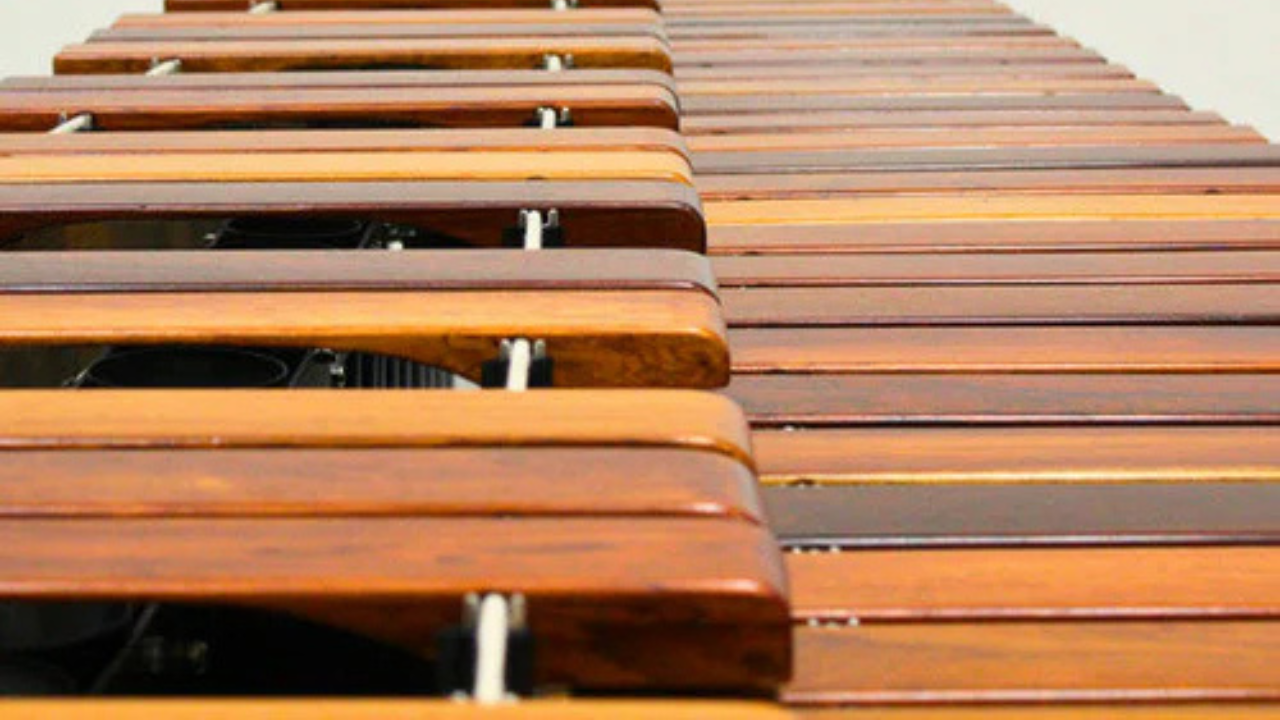
Origins of the Marimba
The marimba traces its roots historically to Africa, where similar instruments with wooden bars were played for ceremonial and cultural purposes. As the instrument migrated across continents, it underwent various modifications and adaptations. In the late 19th century, European and American musicians began incorporating the marimba into orchestras and chamber ensembles, resulting in the development of more standardized, modern versions of the instrument. This exposure also developed the marimba as a solo instrument world wide.
Expanding the Range
The marimba traditionally featured a range of three to four octaves, limiting its melodic possibilities. However, as composers sought greater tonal possibilities, the demand for a broader range became apparent. In the mid-20th century, instrument builders began experimenting with expanding the range of the marimba, leading to the development of the 4.3-octave marimba. This innovation was achieved by adding to the range on both ends of the instrument, allowing for additional melodic and harmonic capabilities.
The Birth of the 5-Octave Marimba
In the late 20th century, the desire for even greater range and increased virtuosity sparked the development of the 5-octave marimba. This advancement required significant engineering to maintain optimal resonance and projection across the extended range. Craftsmen from several manufacturers experimented with different types of woods, bar dimensions, and resonator tube designs to achieve the desired balance of tone and playability.
Technical Challenges and Innovations
Building a 5-octave marimba presented several unique challenges. As the instrument's range expanded, maintaining consistency in tone and volume across all registers became a crucial challenge. Builders had to meticulously tune each bar and fine-tune the resonator tubes to ensure a pure quality of sound. Furthermore, the increased size of the instrument required careful consideration of structural integrity and weight distribution, ensuring optimal stability and playability for the musician. Several manufacturers have streamlined the process, and implemented new technology, such as the Marimba One basso bravo resonators.
Advancements in Material and Construction
Advancements in materials and construction techniques have significantly contributed to the continued development of the marimba in all ranges. Traditional rosewood bars were the standard choice for their warm and resonant qualities. However, due to concerns over sustainability and rising costs, alternative materials such as synthetic and composite bars have emerged. These materials offer comparable tonal characteristics while addressing environmental concerns and providing greater consistency across different climates and performance conditions.
Modern Applications and Impact
The 5-octave marimba has revolutionized the musical landscape, empowering composers and performers with expanded tonal possibilities due to its increased range. Its extended range allows for the exploration of complex harmonies, intricate melodies, and virtuosic techniques. Moreover, this advancement has paved the way for new genres and musical styles, as well as collaborations between marimba players and diverse ensembles, including symphony orchestras, jazz bands, and contemporary music groups.
The development of the 5-octave marimba stands as a testament to human ingenuity and the pursuit of musical excellence. From its humble origins to its modern-day iteration, the marimba has continually evolved to meet the demands of composers and musicians, pushing the boundaries. Are you looking to purchase a five octave marimba? Contact us with any questions about our marimbas for sale.