
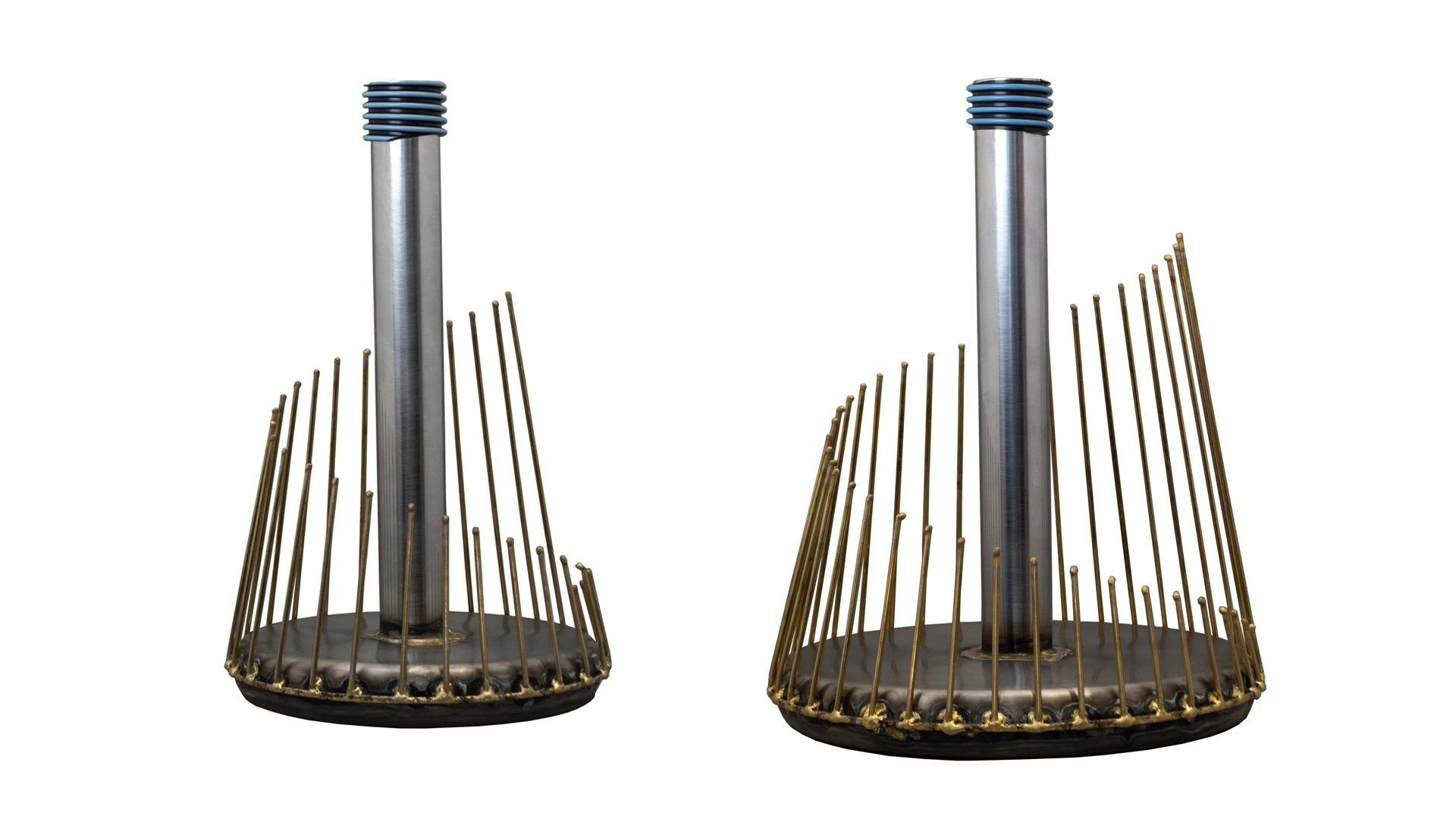
Since the invention of the hauntingly beautiful instrument, it has been increasingly challenging to find a waterphone for sale in not just the United States, but around the globe. Recently the team at Steve Weiss Music has begun selling great waterphone instruments made by AquaSonic, allowing Waterphones to be easily available for percussionists, and musicians everywhere.
AquaSonic Waterphones
Aquasonic Waterphones are the result of meticulous craftsmanship and an unwavering commitment to excellence. Handcrafted by skilled artisans, each instrument is a testament to precision and attention to detail. The selection of high-quality materials, such as bronze and stainless steel, ensures durability and optimal sound production. The design of Aquasonic Waterphones showcases a harmonious blend of elegance and functionality. With a distinctive circular shape, the instrument features a resonator bowl at the base, supported by carefully positioned rods. The rods, adorned with metal prongs and resonators, create a mesmerizing visual display that complements the instrument's enchanting sound.
AquaSonic Super Standard Waterphone
The AquaSonic Super Standard Waterphone comes in a traditional size, with an 8.25" diameter, and 13.5" height. Additionally, it weighs in at just about 1 pound 6 ounces. It is a great option for when waterphones are called for by composers as an effect, ethereal soundscape, and more. This is a great option for a school, university, or freelance performer looking to add this sound to their arsenal when it is called for in performance.
Shop the Super Standard Waterphone
AquaSonic Super Mondo Waterphone
The AquaSonic Super Mondo Waterphone is a larger model than its standard counterpart, with an 10.5" diameter, and 14" height. This larger sized instrument weighs in at just about 1 pound 11 ounces. More complex and resonant due to its extended tines, and larger resonant chamber, this instrument produces a rich dark tone. Perfect as an effect for film scores, orchestral work, and other applications, this instrument produces the full range of tonalities which put the waterphone on the map.
Shop the Super Mondo Waterphone
How to Play a Waterphone
Playing the waterphone is as much about acoustic experimentation as it is about traditional technique. The most common and recognizable method involves bowing the outer rods with a well-rosined double bass or cello bow to create long, sustained, and eerie overtones. You can also approach it percussively by striking the tines with soft yarn mallets, rubber spheres, or friction mallets for a more articulate, bell-like chime. The true magic of the instrument happens when you physically tilt and shift it while playing; the water moving inside the base resonator bends the pitch naturally, creating the waterphone's signature acoustic glissando effect.
The Waterphone in Film and Media
Even if you haven't seen a waterphone in person, you have undoubtedly heard one. It has become the quintessential instrument for building suspense, tension, and dread in cinema. Its haunting metallic groans and shrieks have been heavily featured in iconic soundtracks, including The Matrix, Poltergeist, and Star Trek: The Motion Picture. Modern composers and sound designers consistently rely on the waterphone when they need an organic, acoustic soundscape that feels distinctly otherworldly and remains virtually impossible to perfectly replicate with digital synthesizers or software plug-ins.
Are you in the market for a waterphone instrument, or trying to emulate a waterphone sound? Contact us today to have a percussion specialist find which model is best for your needs.