
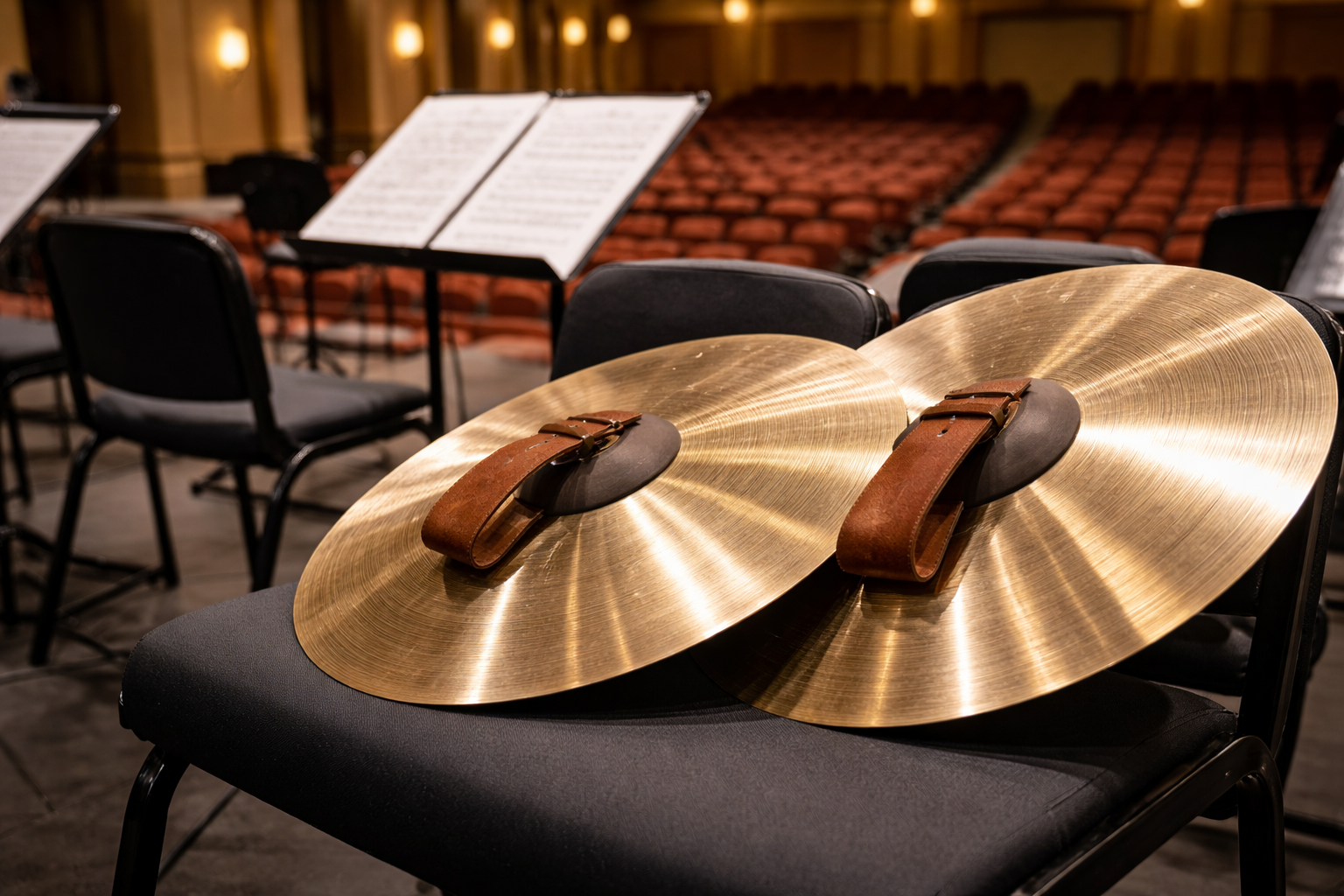
Orchestral crash cymbals, also known as hand cymbals, or piatti, are a vital component of any symphony orchestra, wind band, or percussion ensemble. They can provide a dramatic color and punctuation to musical phrases by adding emphasis to key moments within the repertoire. These pairs of cymbals, often ranging from 14 to 22 inches in size are struck together to create a variety of sounds. What you may not know, is that they come in a variety of styles to suit different types of literature, and musical situations.
One of the main factors that distinguishes different types of orchestral crash cymbals is the way they are made. Germanic, Viennese, and French hand cymbals are three of the most well-known and widely used styles of cymbals in the classical music world, and each has its own unique characteristics and musical advantages.
Germanic crash cymbals, also known as "traditional" or "classical" hand cymbals, are typically made from a heavier, thicker metal than other types of cymbals. They have a relatively flat shape and a deep, dark tone that is well-suited to large, powerful orchestral works. Germanic cymbals are often played in robust, impactful musical situations due to their attack and pronounced sustain.
Viennese hand cymbals, as the name suggests, are closely associated with the music of Vienna and the Austro-German tradition. They are generally lighter and thinner than Germanic cymbals, with a more pronounced curve to the surface. This gives them a brighter, more shimmering sound that is particularly effective in delicate, lyrical passages. Viennese cymbals are usually a go to mid range cymbal for a variety of repertoire. The popular Zildjian series called Classic Orchestral falls primarily into the Viennese weight range.
French hand cymbals, also known as "crash cymbales a main" or simply "cymbales," are the lightest cymbals and thinnest of the three main types of cymbals. They have a rich tone that blends well with other orchestral instruments. French cymbals are often chosen for their enhanced overtones and light colorful sound.
Ultimately, the choice of which type of orchestral crash cymbals to use depends on a variety of factors, including the musical context, the personal preferences of the conductor and performers, and the available equipment. Each style of cymbal has its own strengths and weaknesses, and skilled percussionists will be able to adapt their playing technique to bring out the best qualities of each one. Have a question about which cymbals are best for you or your ensemble? Contact a percussion specialist today at Steve Weiss Music to choose the best option for your needs.